Rubber Bands and Elastics: What You Need to Know
Rubber bands might be the smallest part of your braces, but they do some of the biggest work. They're what corrects your bite. Braces straighten your teeth. Elastics fix how your upper and lower jaw line up. And here's the thing: they only work if you actually wear them. This page tells you everything you need to know.
What Are Orthodontic Rubber Bands?
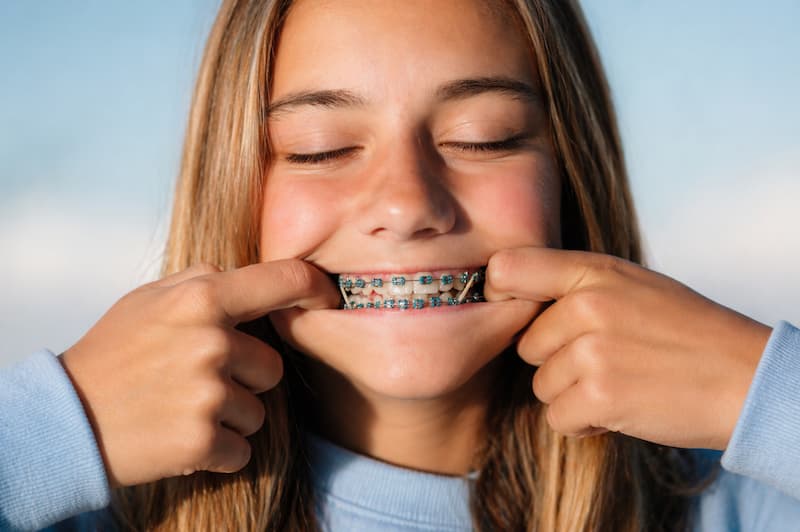
Small elastics that connect your upper braces to your lower braces. They're different from the colored bands that hold your wire in place. Those are decorative. These are functional. They create the force that moves your jaw into the right position.
Without them, you'd end up with straight teeth that don't bite together properly. With them, you get straight teeth and a bite that works.
Why They Matter
Your braces move teeth. Rubber bands move your bite. They work across your jaw, pulling things forward, backward, or sideways depending on what your bite needs.
Braces are only doing half the job here. Your elastics do the other half. Skip the elastics and you're paying for full treatment but only getting half the result.
Types of Elastics
Dr. Tahir or Dr. Lia will tell you exactly which type you need. Here are the most common ones:
Class II Elastics (Most Common)
These fix overbites. They hook from your upper back teeth to your lower front teeth, gently pulling the lower jaw forward. If your upper teeth stick out too far, these are probably what you'll wear.
Class III Elastics
These fix underbites. They hook from lower back teeth to upper front teeth, pulling the lower jaw back. Opposite direction of Class II.
Triangle/Vertical Elastics
These fix specific bite angles. They attach in a triangle pattern across three brackets. Dr. Tahir or Dr. Lia will show you exactly where.
Box or Cross-Bite Elastics
These fix side-to-side bite issues. They pull teeth sideways to center your bite.
How to Wear Rubber Bands
Where They Go (Placement)
Dr. Tahir or Dr. Lia will show you exactly which hooks to use. Every patient is different. If you forget the placement between appointments, call us. Wrong placement doesn't just not work. It can move teeth in the wrong direction.
Wear Schedule: 22+ Hours Daily
This is the rule. There's no way around it. Elastics only work with constant, steady pressure. They come out for eating, brushing, and flossing. That's it. Every other minute of the day, they should be on your teeth.
This is not a sometimes thing. Wearing them half the time doesn't give you half the result. It gives you almost no result. Your teeth start moving, then slide back, then start again. You end up in treatment longer with a worse outcome.
22 hours means 22 hours. Dr. Tahir and Dr. Lia can tell at your next appointment whether you've been wearing them. The teeth either moved or they didn't.
When to Change Them
Usually every day. Sometimes every few days. Dr. Tahir or Dr. Lia will tell you. Old elastics stretch out and lose their pull. Fresh ones are stronger. Swap them after meals when you're already taking them out anyway.
What Happens If You Don't Wear Them
We're going to be straight with you because this is the number one thing that extends treatment time:
- Your treatment gets longer. Missing even a few hours a day adds up. Inconsistent wear can add 6+ months to your total time in braces. That's 6 extra months of appointments, adjustments, and brackets on your teeth because the elastics weren't in.
- Your bite correction stalls. The teeth stop moving at the rate your treatment plan predicted. Everything slows down.
- Your plan has to change. When elastics aren't worn, Dr. Tahir and Dr. Lia have to adjust the plan. That might mean different elastics, heavier forces, or extended treatment. All of which could have been avoided.
- Your final result suffers. Skipped elastics can mean your bite isn't fully corrected by the time braces come off. You went through the whole process and didn't get the complete result.
There's no way to sugarcoat this. Elastics are the one part of treatment that depends entirely on you. Dr. Tahir and Dr. Lia can design the perfect plan, use the best brackets and wires, and nail every adjustment. But if the elastics aren't being worn, the bite won't be right at the end.
How to Make Elastics Easy
Build It Into Your Routine
Put them in first thing in the morning. Take them out to eat. Put fresh ones in right after. Do the same at lunch and dinner. Within a week, it's automatic. You won't even think about it.
Keep Extras Everywhere
We give you plenty at every appointment. Put a pack in your backpack, your locker, your car, your bathroom, your nightstand. If you always have them within reach, you'll never have an excuse to go without.
Pick Your Colors
Elastics come in colors. Pick ones you like. It sounds small but wearing something you chose feels different than wearing something you were told to wear. Especially for teens.
Wear Them with Pride
Elastics are invisible once you get used to them. They're part of treatment and a sign you're committed to results. Many patients forget they're wearing them.
Change Them At Meals
You're already taking them out to eat. That's the natural time to toss the old ones and put fresh ones on. Remove, eat, brush, replace. It takes 30 seconds and it keeps the force consistent.
Will They Hurt?
The first few days, yes. You'll feel a pulling sensation and your jaw might ache. That's normal. It means the elastics are working.
By the end of the first week, the soreness fades. By week two, most patients forget they're even wearing them. Your jaw adjusts. The pressure becomes background noise.
If the discomfort is sharp or doesn't fade after a week, call us. That's not normal and we'll check it.
The Bottom Line
Braces straighten teeth. Elastics fix bites. You need both for a complete result.
Dr. Tahir and Dr. Lia handle the braces. You handle the elastics. That's the deal. Wear them 22+ hours a day, change them when you're told, and your treatment stays on track and finishes on time.
Skip them and everything takes longer, costs more stress, and the result isn't as good.
What Makes Cool Braces Different From Old-Fashioned Orthodontic Solutions



Frequently Asked Questions
Put a new one on. Right away. We give you extras for exactly this reason. If you run out, call us. Even a few hours without one slows things down. Don't let it turn into days.
You can, but don't. Take them off, eat, clean your teeth, put fresh ones on. Takes 30 seconds. Eating with them in stretches them out, traps food, and they'll probably snap anyway.
They're thin on purpose. They break from chewing pressure, eating with them in, or stretching too hard when putting them on. If it's happening a lot, you might be hooking them wrong. Ask us to show you the technique at your next visit. We'll send you home loaded up with extras.
You'll feel pressure and a pulling sensation. That's the point. It means they're working. Sharp pain? That's not normal. Take them off and call us. They might be on wrong or you might need a different size.
Depends on consistency. With full-time wear (22+ hours a day), bite correction typically happens within 3 to 6 months. Wear them on and off and that same correction can stretch to 12 months or more. There's no shortcut. Just wear them as directed and your bite moves on schedule. Skip them and it doesn't.
We're Ready When You Are.