Straightening Crooked Teeth: Your Options
Rotated, twisted, or misaligned teeth are one of the most common reasons people walk through our door. Maybe it's one tooth that's out of place. Maybe the whole smile needs work. Either way, Dr. Tahir and Dr. Lia have straightened over 25,000 smiles collectively and they'll tell you exactly what yours needs at a free consultation.
What Are Crooked Teeth?
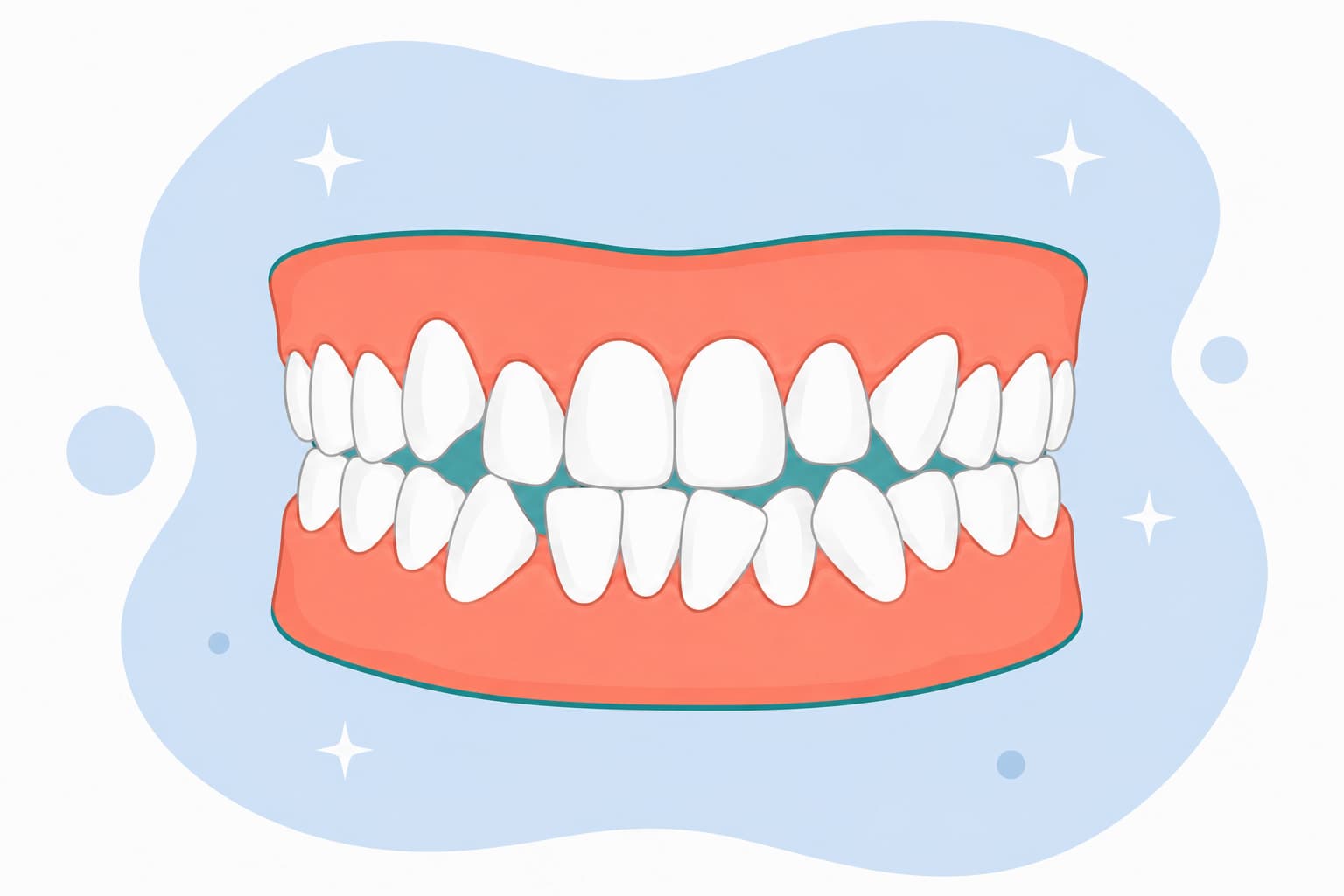
Crooked teeth are teeth that don't line up the way they should. They might be rotated, tilted, overlapping, or pointing in the wrong direction. It can be as simple as one tooth that's slightly twisted or as complex as a full mouth where almost nothing lines up. Severity varies, but the fix is the same: move each tooth into its correct position so your bite works and your smile looks the way you want it to.
What Causes Crooked Teeth?
Crowding
The number one cause. When your jaw doesn't have enough room, teeth twist and rotate to squeeze in.
Genetics
Tooth size and jaw size are inherited. If you got your mom's big teeth and your dad's narrow jaw, crookedness is almost inevitable.
Early Tooth Loss or Gum Disease
Lose a tooth and the ones next to it start drifting and rotating into the empty space.
Habits
Tongue thrust, thumb-sucking, or pushing on teeth with your tongue can shift them out of alignment over time.
Abnormal Eruption
One tooth comes in at a weird angle and it throws off the teeth around it. Chain reaction.
Jaw Growth Patterns (Skeletal)
If the upper and lower jaw grow at different rates, teeth don't have a stable foundation and crookedness develops.
Why Fix Crooked Teeth?
Confidence & Aesthetics
This is the #1 reason people come to us. Straight teeth change how you smile, how you take photos, how you show up at work and school. Our patients say it all the time: they wish they'd done it sooner.
Easier to Keep Clean (Oral Hygiene)
Crooked teeth have tight spots and overlaps that floss can't reach and your toothbrush misses. That means more cavities, more plaque, more gum problems. Straightening your teeth makes basic hygiene actually work the way it's supposed to.
Better Bite Function
When teeth are aligned, they bite together evenly. Crooked teeth create uneven forces that wear down enamel faster and put stress on your jaw.
Long-term Durability
Straight teeth are easier to maintain, less likely to chip or crack, and hold up better over a lifetime. It's an investment in teeth that last.
How We Fix Crooked Teeth at Cool Braces
Traditional Braces
Our go-to for most crooked teeth cases. Braces give us total control over each individual tooth. We can rotate, tilt, and reposition every tooth exactly where it needs to be with precision. No guesswork. No hoping the tray does its job.
Here's what braces let us do that aligners often can't:
• Rotate severely twisted teeth with precision
• Fix crowding and spacing at the same time
• Align upper and lower arches so your bite closes properly
• Handle complex cases that need movement in multiple directions
Braces work 24/7. They don't depend on you remembering to wear them. They're always doing the work.
Timeline: Mild crookedness: 18 to 24 months. Severe crookedness: up to 30 months. But those are ranges, not your number. Dr. Tahir and Dr. Lia need to look at your teeth, take X-rays, and evaluate your bite before giving you a timeline that actually means something. You'll get that at your free consultation.
Invisalign (For Mild to Moderate Crookedness)
If your crookedness is mild to moderate and your bite foundation is solid, Invisalign can get the job done. Clear trays, removable for eating, and nearly invisible.
Honestly, for severe crookedness, braces give us better control and more reliable results. We'll never put you in aligners if braces would do a better job. That's not how we operate.
For patients with mild to moderate crookedness and a good bite foundation, Invisalign aligners can straighten teeth effectively. The advantages:
• Virtually invisible treatment
• Removable aligners for eating and special events
• Often slightly faster than braces for mild cases
For severe crookedness, traditional braces typically provide better control and more reliable results.
Palatal Expanders for Kids
If your child is showing early signs of crookedness because of crowding, a palatal expander can widen the upper jaw and create space for teeth to come in straight. This is early intervention at its best. Fix the space problem before it becomes a crooked teeth problem.
Starting early can reduce or eliminate the need for full braces later. It can also take extractions off the table entirely. That's why we recommend bringing kids in at age 7.
Learn more about early treatment.
What Should You Do Now?
Whether it's one tooth or a full smile, crooked teeth are what we do. 25,000+ patients. 30 years. A father-daughter team that does this every single day. Come in and let Dr. Tahir and Dr. Lia show you what your smile could look like.
Your first visit is free, and you'll walk out with a real plan.
Book Your Free Consultation
What Makes Cool Braces Different From Old-Fashioned Orthodontic Solutions



Frequently Asked Questions
Mild cases? Invisalign works well. Severe crookedness with rotated teeth? Braces give us more control and a better result. We'll look at your case and tell you what actually fits. No pushing one option over the other.
Depends on how much work your teeth need. Here's the general range: Easy cases: 4 to 12 months. Mild cases: 12 to 24 months. Severe cases: 24 to 30+ months. The real answer? It depends on what's going on in your mouth. Dr. Tahir and Dr. Lia would need to take a look before giving you a number you can plan around. Your first visit is free.
Not if you wear your retainer! Fixed, removable, or both. With consistent wear, your smile stays straight for life. That's the deal.
When possible, yes. Early treatment between ages 6 and 10 can guide jaw development and prevent things from getting worse. It can also reduce or eliminate the need for full braces later. If you're noticing crookedness, bring them in. The evaluation is free.
Yes. That's literally what braces are built for. Even severely twisted teeth respond well. It might take a bit longer than a mild case, but the results are reliable. Braces handle the hard stuff.
We're Ready When You Are.