What a Crossbite Is, and How We Correct It
A crossbite is when some of your upper teeth sit inside your lower teeth instead of outside. It's one of those bite issues most people haven't heard of until their dentist or orthodontist points it out. But it's more common than you'd think, and ignoring it leads to real problems: uneven wear, jaw shifting, gum recession, and pain.
The good news: crossbites respond really well to treatment, especially in kids. Dr. Tahir and Dr. Lia use palatal expanders for growing kids and braces for all ages to get the bite aligned properly. Your first visit is free.
What Is a Crossbite?
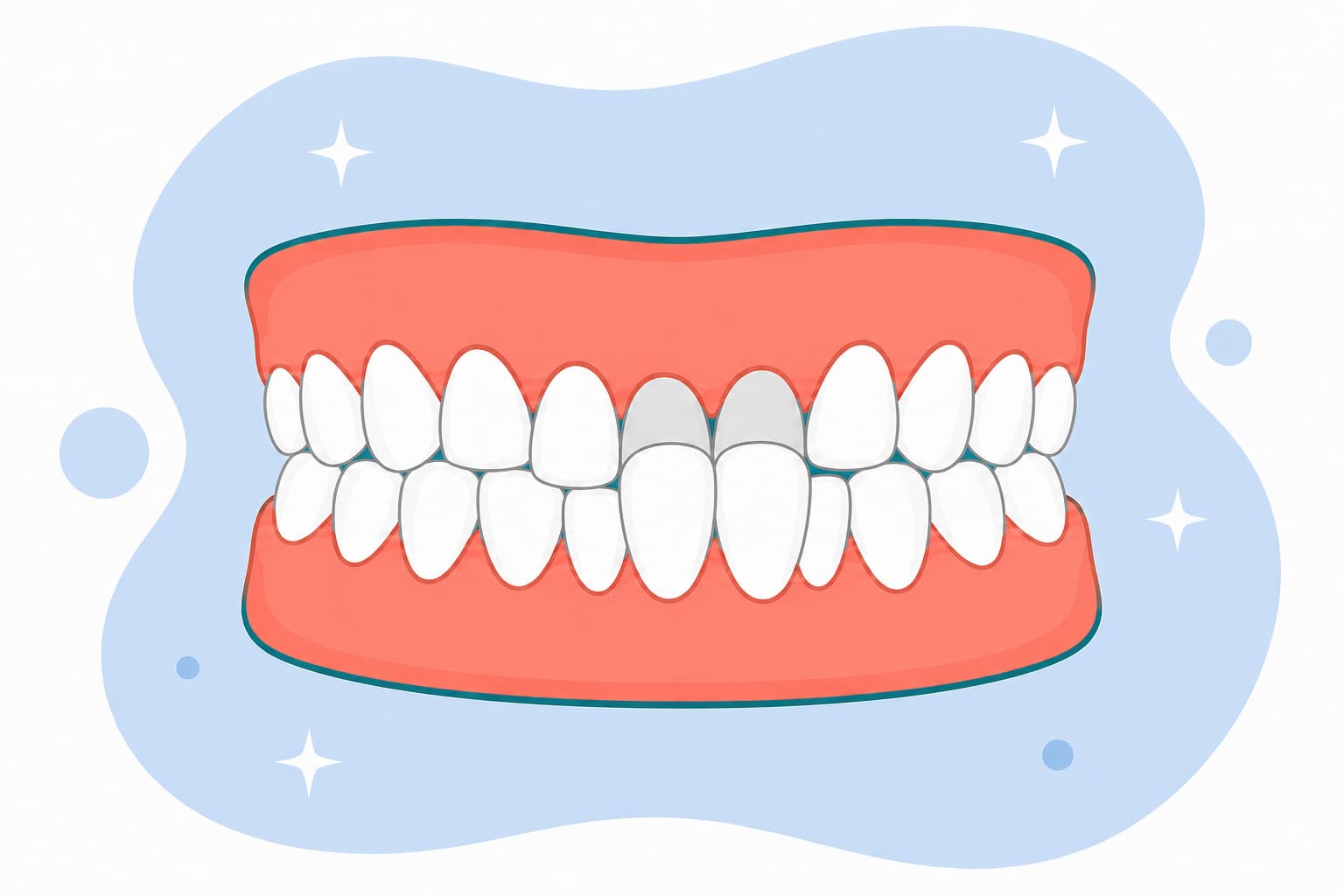
In a healthy bite, your upper teeth sit slightly outside your lower teeth when you close your mouth. A crossbite flips that. One or more upper teeth sit inside the lower teeth instead of outside. It's a side-to-side misalignment, and it can happen in the front or the back of the mouth.
Anterior Crossbite (Front Teeth)
One or more upper front teeth cross behind the lower front teeth. This is more visible and affects how your smile looks and how your front teeth work together.
Posterior Crossbite (Back Teeth)
The upper back teeth (molars or premolars) sit inside the lower ones, usually on one side. This often causes the jaw to shift to one side when you bite down, which can lead to asymmetry over time.
Both types disrupt how your bite works and both are worth fixing.
What Causes a Crossbite?
Narrow Upper Jaw
The most common cause. If your upper jaw is narrower than your lower jaw, the upper teeth physically can't sit outside the lower teeth. They drop inside. This is often genetic and it's the exact thing a palatal expander is designed to fix.
Tongue Position
If the tongue sits low or off to one side during childhood development, it doesn't apply the natural outward pressure that helps the upper jaw widen as it grows. The jaw stays narrow and a crossbite develops.
Thumb-Sucking or Finger-Sucking
Prolonged sucking habits narrow the upper jaw and change where teeth end up. The longer the habit continues, the more pronounced the effect.
Genetics
Jaw width and shape run in families. If a parent had a crossbite, their child is more likely to develop one.
Mouth Breathing
Chronic mouth breathing, often caused by allergies, enlarged adenoids, or airway obstruction, changes how the upper jaw develops. The jaw stays narrow instead of widening naturally. It's one of those causes that's easy to miss because the breathing feels normal to the child.
Why You Shouldn't Wait on a Crossbite
A crossbite doesn't fix itself. And the longer it stays, the more damage it does:
- Uneven tooth wear. When teeth don't line up the way they should, certain teeth grind against each other at wrong angles. That accelerates wear on surfaces that weren't built to take that kind of force.
- Gum recession. The teeth that are crossed often push against gum tissue in ways that cause the gums to pull back. Once gum tissue recedes, it doesn't grow back on its own.
- Jaw shifting and asymmetry. This is the big one, especially in kids. A posterior crossbite forces the jaw to shift to one side when biting down. Over years of growing that way, the jaw can develop permanently asymmetric. The face literally grows unevenly. That's why early treatment matters so much. Early treatment does more than straighten teeth. It keeps the jaw from growing crooked in the first place.
- TMJ pain. The shifted jaw stresses the joint. Pain, clicking, popping, headaches, muscle fatigue. All connected to a bite that's been off-center for too long.
- Chewing difficulty. You naturally favor the side that works better. The crossed side gets avoided. That uneven use creates more uneven wear.
- Speech. Crossbites can affect how certain sounds are produced, especially in kids whose speech is still developing.
Bottom line: crossbites are progressive. The jaw shifting gets worse. The wear gets worse. The asymmetry gets worse. Every year of treatment delay is a year of damage that didn't need to happen.
Why Early Treatment Is a Game-Changer for Crossbites
If there's one bite issue where early treatment makes the biggest difference, it's crossbites. Here's why:
Between ages 6 and 10, the bones in your child's upper jaw haven't fully fused. There's a natural suture (growth line) running down the middle of the palate that a palatal expander can gently widen. We're literally making the jaw wider by working with biology.
After that growth window closes, the suture fuses. In adults, we can still fix the crossbite by moving teeth with braces, but we can't widen the jaw itself without surgery. The treatment works, but it's more limited.
That's the difference between treating a crossbite at age 8 versus age 18. At 8, we widen the jaw. At 18, we reposition the teeth within a jaw that's already set.
Early expansion can prevent asymmetric jaw growth, reduce severity before permanent teeth are fully in, take extractions off the table, and shorten the braces phase later. It's one of the highest-value early interventions in orthodontics.
How We Fix Crossbites at Cool Braces
Palatal Expanders (Growing Kids)
For kids with a narrow upper jaw, this is the most effective tool we have. A palatal expander gradually widens the upper jaw over a few weeks. You turn a small key once a day. The upper teeth move outward, the jaw gets wider, and the crossbite resolves.
Treatment typically runs 6 to 12 months: a few weeks of active expansion, then several months of stabilization while new bone fills in. Most kids adjust within a few days and barely think about it after the first week.
This is the treatment that makes parents say 'I wish we'd done this sooner.' Because by the time the expander comes out, the crossbite is gone and the jaw is set up for everything that comes next.
Learn more about orthodontic appliances.
Braces (All Ages)
After expansion, or for patients who don't need an expander, traditional braces handle the rest:
• Correcting any rotation caused by the crossbite
• Aligning both arches so upper and lower teeth meet properly
• Guiding teeth that are still coming in into their correct positions
• Fine-tuning the bite so it's stable long-term
Most crossbite cases with braces run 18 to 24 months. If an expander was used first, the braces phase is often simpler because the hard part (widening the jaw) is already done.
Combination Approach (Expander then Braces)
For a lot of crossbite cases in kids, the best plan is expander first, braces second. The expander fixes the jaw width. The braces finish the alignment. Together they produce the most stable, long-lasting result.
Total treatment time for the combination approach: roughly 24 to 36 months including both phases. That sounds like a lot, but the expander phase is low-maintenance and the braces phase is usually shorter than it would've been without expansion.
Adults: We can't expand the adult jaw with an appliance the way we can in a growing child. But braces still reposition teeth effectively and correct the crossbite at the tooth level. Most adults get a great result with braces alone. Severe skeletal crossbites may benefit from surgical expansion, but that's uncommon. We'll tell you honestly what your case needs.
How Long Does Crossbite Treatment Take?
Expander only: 6 to 12 months. Braces only: 18 to 24 months. Expander then braces: 24 to 36 months total.
Those are general ranges. Your timeline depends on severity, age, whether one side or both are affected, and what else is going on with your bite. Dr. Tahir and Dr. Lia need to see your teeth and take imaging before giving you a number that means something. You'll get yours at the free consultation.
Crossbite Treatment for Kids, Teens, and Adults
- Kids (ages 6 to 10): The best window. The jaw suture hasn't fused, so a palatal expander can widen the jaw and fix the crossbite at the source. This is the most efficient treatment timing and prevents the jaw from growing asymmetrically. If your child has a crossbite, this is the time to act.
- Teens: If the crossbite wasn't caught early, braces are the primary tool. The jaw suture may still have some flexibility in early teens, so limited expansion is sometimes possible. Later teens are treated similarly to adults: braces to reposition teeth within the existing jaw.
- Adults: Crossbite treatment in adults focuses on tooth movement rather than jaw expansion. Braces correct the bite by repositioning teeth so upper and lower arches meet properly. Results are excellent for most cases. Severe skeletal crossbites may need a surgical assist, but most adults never need it.
What Should You Do Now?
Crossbites are one of those bite issues that cause damage quietly. The jaw shifts a little more each year. The wear accumulates. The asymmetry develops so gradually you don't notice until it's significant. The sooner it's addressed, the simpler the fix and the less damage to undo.
If you think you or your child might have a crossbite, bring it to Dr. Tahir and Dr. Lia. They've been treating crossbites for over 30 years and they'll tell you exactly what's going on and what it needs.
Your first visit is free, and you'll finally have clarity on your bite.
What Makes Cool Braces Different From Old-Fashioned Orthodontic Solutions



Frequently Asked Questions
Nope. The first couple of weeks bring some pressure and maybe extra saliva. That's normal. Most patients adjust within 1 to 2 weeks and barely think about it after that. Dr. Tahir and Dr. Lia control the pace of expansion based on your child's response. Never faster than comfortable.
For about a week or two, yeah. A lot of kids notice a slight lisp. It goes away completely once they adjust. Honestly? It's actually a sign the expander is doing its thing.
Yes. Adult bone can't be expanded with an appliance the way a growing child's can, but braces still reposition teeth effectively. Most adult crossbites respond well to braces alone. Severe skeletal cases may need surgery, but we'd only bring that up if it actually applies to your case. No scare tactics.
Depends on severity. An expander phase typically runs 6 to 12 months. Braces after that run 18 to 24 months. Mild crossbites can wrap up faster with braces alone. The real timeline comes from your X-rays and exam, not a website. First visit is free.
Not if you wear your retainer. We'll fit you with one after treatment to keep your bite stable for life. That's the deal: wear it, keep it.
We're Ready When You Are.