Fixing Crowded Teeth: Causes and Solutions
Crowding is the number one reason people walk through our door. When your jaw doesn't have enough room, teeth twist, overlap, and pile up. It makes your smile harder to clean, harder to feel good about, and harder to keep healthy long-term.
The good news: we fix crowding every single day. For kids, we can often prevent it from getting worse with early intervention. For teens and adults, braces straighten things out and create space where there wasn't any. Dr. Tahir and Dr. Lia have treated over 25,000 patients. Crowding is what they see most. Your first visit is free.
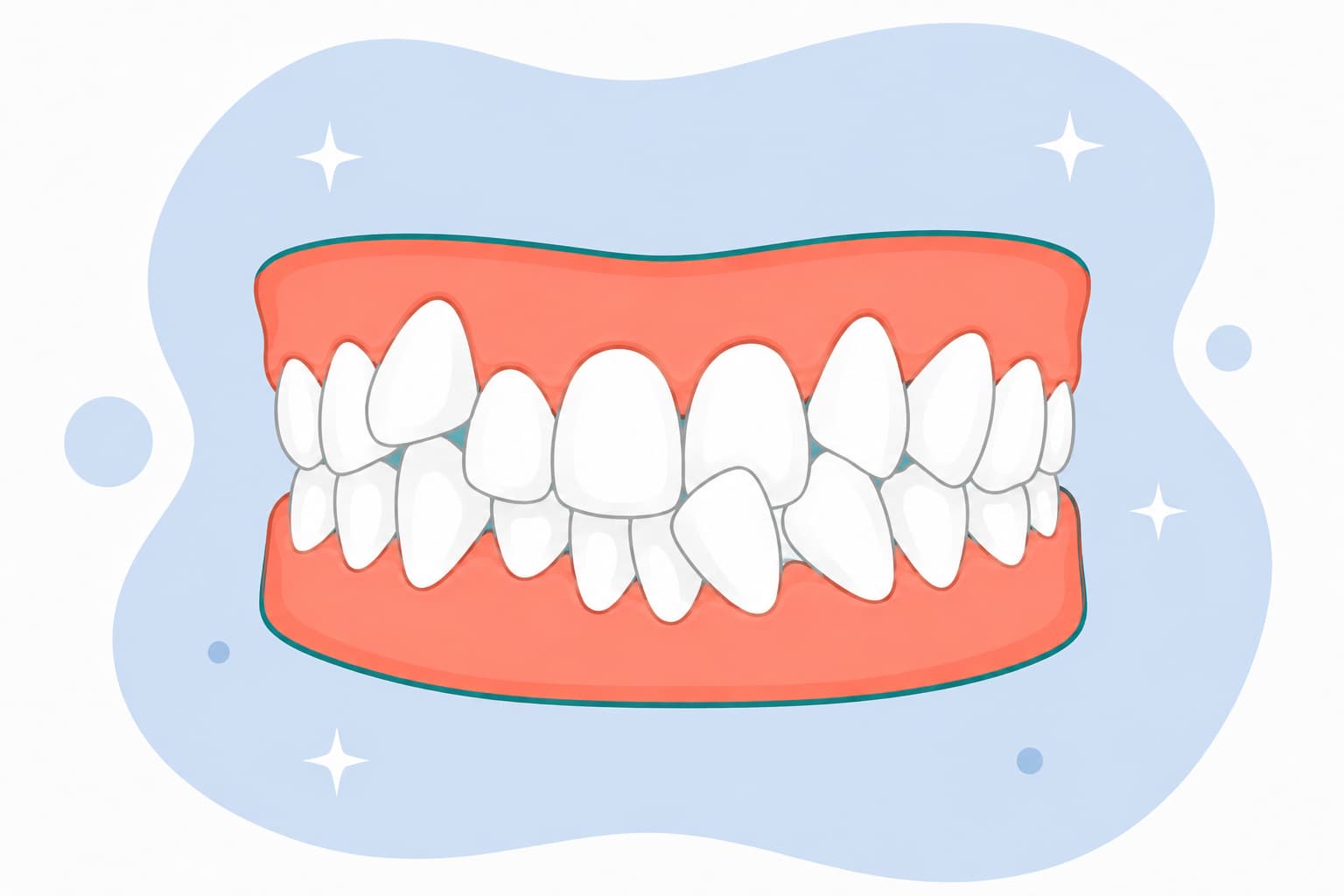
What Is Dental Crowding?
Crowding is when your teeth don't fit in your jaw. Instead of lining up in a smooth arch, they overlap, rotate, twist, and push out of position. It can be as mild as one tooth that's slightly turned or as severe as a full mouth where almost everything is out of place.
It's not just how it looks. Crowded teeth are harder to brush, harder to floss, and more likely to develop cavities and gum disease. The tighter the crowding, the bigger the problem.
What Causes Crowded Teeth?
Jaw Too Small for the Teeth
The number one cause. You inherited your jaw size from one parent and your tooth size from the other. If the teeth are bigger than the jaw can handle, they crowd
Genetics
Crowding runs in families. If your parents or grandparents had it, you're more likely to as well.
Extra Teeth
Some people develop extra teeth (hyperdontia) that take up space meant for the normal ones. More teeth, same jaw, not enough room.
Baby Teeth That Fell Out Too Early or Too Late
Lose a baby tooth too early and the teeth on either side drift into the space. Lose it too late and the permanent tooth underneath can't find its way in straight. Either way, crowding develops.
Jaw Growth Patterns
If your jaw didn't grow as much as your teeth needed it to during childhood, the teeth end up competing for space.
Why You Shouldn't Ignore Crowding
Oral Hygiene
This is the most underrated reason to fix crowding. Overlapping teeth have tight spots that floss can't reach and your toothbrush misses entirely. Plaque builds up in those hidden areas. Cavities form. Gums get inflamed. You can brush twice a day and still end up with problems because the teeth themselves won't let you clean them properly.
Confidence
A lot of our patients tell us crowding was the thing that made them stop smiling in photos or cover their mouth when they laughed. Straightening crowded teeth changes that fast. It's one of the most visible transformations in orthodontics.
Function
Crowded teeth don't line up evenly. That means uneven bite forces, uneven wear, and more stress on certain teeth than they were built to handle.
Tooth Lifespan
Crowded teeth wear down faster, chip easier, and are more prone to cracking. Straightening them doesn't just look better. It makes your teeth last longer.
Bottom line: crowding gets worse over time, not better. Teeth don't un-crowd themselves. The earlier you address it, the less there is to fix.
How We Fix Crowding at Cool Braces
Palatal Expanders (Growing Kids)
If your child is showing early signs of crowding, we can often fix the space problem before it becomes a crowding problem. A palatal expander gradually widens the upper jaw, creating room for permanent teeth to come in straight instead of piling up.
This is early intervention at its best. Treat the cause (not enough space) before the effect (crowded teeth) gets worse. Starting early can reduce or eliminate the need for extractions later. It can also shorten the braces phase down the road. That's why we recommend every kid comes in at age 7.
Learn more about early treatment.
Traditional Braces
Our primary tool for crowding. Braces let us do what aligners often can't with severe crowding: rotate twisted teeth, de-crowd overlapping ones, widen the arches slightly, and align everything into a bite that works.
Here's what we're doing:
- Creating space by gently expanding the dental arches
- Untwisting and straightening each tooth into its correct position
- Aligning upper and lower arches so the bite closes properly
- Fixing rotations that crowding caused
Braces work 24/7. They don't depend on you wearing them. They're moving teeth around the clock, which matters when there's a lot of repositioning to do.
Timeline: mild to moderate crowding runs 18 to 24 months. Severe crowding can take up to 30 months. But those are ranges, not your number. Dr. Tahir and Dr. Lia need to look at your teeth and take X-rays before giving you a timeline you can count on, which is exactly what your free consultation is for.
Strategic Extractions (When They're the Right Call)
Sometimes the crowding is so severe that there isn't enough room even after expanding the arches. In those cases, removing one or more teeth creates the space needed for everything else to line up properly.
We know that sounds counterintuitive. Removing teeth to improve your smile? But here's why it works:
- The remaining teeth now have room to sit in their correct positions
- The result is a balanced, natural-looking smile
- Avoids aggressive expansion that could look forced or unnatural.
Not every case needs extractions. Most don't. We only go there when it genuinely produces a better result than the alternatives. Dr. Tahir and Dr. Lia will walk you through the reasoning with your X-rays in front of you. If extractions are part of the plan, you'll understand exactly why before anything happens.
Invisalign (Mild to Moderate Crowding)
For mild crowding with a solid bite foundation, Invisalign can get the job done. Clear trays, removable, nearly invisible. Good option for adults who want something discreet.
For moderate to severe crowding? Braces give us significantly more control. Rotated teeth, tight overlaps, and complex repositioning are where braces pull ahead. We'll be straight with you about which tool your case needs. If aligners can handle it, great. If not, we won't pretend they can.
How Long Does Crowding Treatment Take?
It depends on severity:
Mild crowding: 12 to 18 months. Moderate crowding: 18 to 24 months. Severe crowding: 24 to 30+ months. Kids starting with an expander: add 6 to 12 months for the expander phase, but it often shortens the braces phase later.
The real timeline comes from your X-rays and exam, not a website. Dr. Tahir and Dr. Lia will give you your number at a free consultation.
Crowding Treatment for Kids, Teens, and Adults
- Kids (ages 7 to 10): The growth window. If we catch crowding early, a palatal expander can create space before permanent teeth are fully in. This is the most efficient time to treat because we're working with your child's natural growth. What takes 6 months with an expander at age 8 might take 24 months with braces at age 14.
- Teens: By the teen years, most permanent teeth are in and the crowding picture is clear. Braces are our go-to. Treatment is straightforward and results are predictable. If an expander was used earlier, the braces phase is usually shorter.
- Adults: Crowding doesn't have an age limit for treatment. We straighten crowded teeth in adults every week. Adult bone is denser, so treatment may take slightly longer, but the results are just as good. A lot of our adult patients say their only regret is not doing it sooner.
What Should You Do Now?
Crowding is the most common thing we treat and the thing we've treated the most. Over 25,000 patients. Over 30 years. A father-daughter team that sees crowded teeth every single day and knows exactly what to do about them.
Whether it's your kid, your teen, or your own smile, come in and let Dr. Tahir and Dr. Lia take a look.
Your first visit is free, and you'll leave with a clear plan for straighter teeth.
What Makes Cool Braces Different From Old-Fashioned Orthodontic Solutions



Frequently Asked Questions
Often, yes. Crowding can get worse as permanent teeth come in and the jaw keeps growing. It also makes teeth harder to clean, which means more cavities and gum problems. Early treatment can prevent all of that. Worth getting it looked at sooner rather than later.
No. A lot of crowding cases can be fixed without pulling teeth, especially with early treatment and expanders. For severe cases, extractions are sometimes the right call. But we avoid it whenever we can. We'll talk through your options at the consultation so you're never in the dark.
Depends on severity. Mild crowding: 12 to 18 months. Moderate: 18 to 24 months. Severe: up to 30 months or more. Those are ranges, not your number. Dr. Tahir and Dr. Lia need to see your teeth and take X-rays before giving you a timeline that actually means something. First visit is free.
Aligners handle mild to moderate crowding well. Severe crowding? Braces give us more control and usually a better result. We're not going to put you in aligners if braces would do a better job. That's not how we work.
Not if you wear your retainer. Fixed, removable, or both. We'll set you up with what works best for your case. Wear it and your smile stays put.
We're Ready When You Are.