What Is a Deep Bite, and How Is It Treated?
A deep bite is when your upper front teeth overlap your lower front teeth too much, usually 5mm or more. A normal overbite (2 to 3mm) is healthy. A deep bite is not. It causes real problems: worn-down teeth, gum damage, jaw pain, and speech issues. The good news? We fix these all the time. Dr. Tahir and Dr. Lia treat deep bites with braces, bite plane appliances, and intrusion techniques that correct the overlap and protect your teeth long-term.
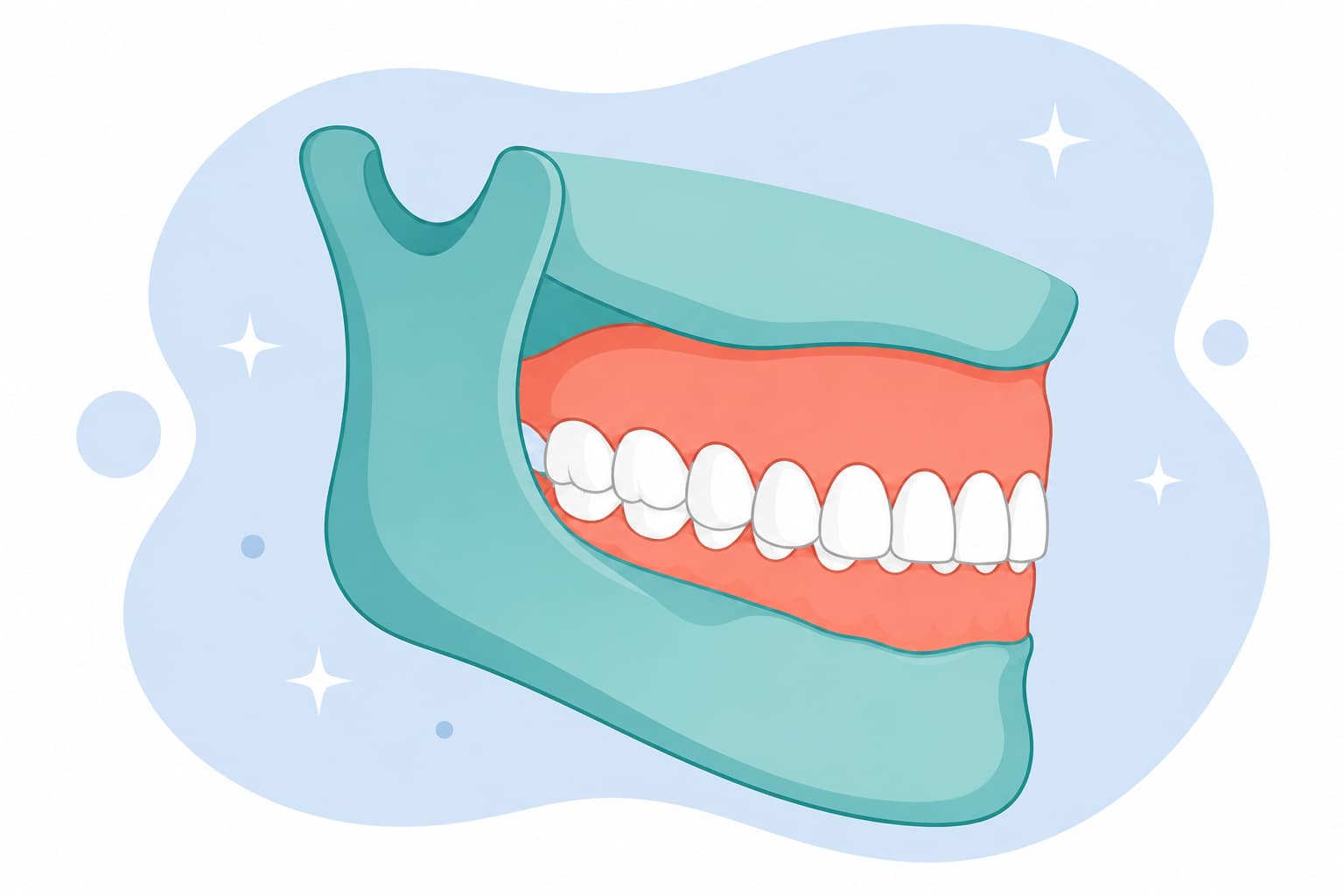
Deep Bite vs. Overbite: What's the Actual Difference?
While related, these are distinct issues:
Overbite
Everyone has some overbite. That's normal. Your upper front teeth are supposed to overlap your lower front teeth by about 2 to 3mm. That's healthy and protective. A deep bite is when that overlap hits 5mm or more. That's when problems start.
Deep Bite
A deep bite is when that overlap gets excessive, usually 5mm or more. Your upper teeth cover way too much of your lower teeth. Sometimes you can barely see your lower teeth at all when you bite down.
Simple way to think about it: overbite is normal overlap. Deep bite is too much overlap. One is fine. The other needs fixing.
What Causes a Deep Bite?
Genetics (Skeletal Pattern)
Some people are born with a jaw structure that creates a deep bite. It runs in families.
How Teeth Came In (Eruption Pattern)
Sometimes front teeth come in too far, or back teeth don't come in far enough. That tips the overlap in the wrong direction.
Tooth Size Mismatch
Larger front teeth or smaller back teeth can throw the ratio off and create a deep bite.
Jaw Growth Issues
If the upper and lower jaw don't grow at the same rate during childhood, a deep bite can develop
Habits & Posture
Prolonged tongue thrust or certain mouth postures can contribute over time.
Why You Shouldn't Ignore a Deep Bite
Worn-Down Teeth
The excessive overlap grinds your lower front teeth against the backs of your upper teeth. Over years, they get shorter, weaker, and more prone to cracking.
Gum Damage & Recession
In severe cases, your lower front teeth push into the gum tissue behind your upper teeth. That leads to recession, sensitivity, and tissue damage that gets harder to reverse the longer you wait.
Jaw Pain & TMJ Issues
A deep bite puts uneven stress on your jaw joint. That can show up as pain, clicking, popping, or headaches.
Speech Issues
Severe deep bites can cause a lisp or make certain sounds harder to pronounce clearly.
How Your Face Looks (Aesthetics)
Deep bites can make the lower face look shorter or the chin look pushed back. Correcting the bite often improves facial balance too
Bottom line: a deep bite gets worse over time, not better. The teeth keep wearing. The gums keep receding. The jaw keeps hurting. Earlier treatment means less damage to undo.
How We Fix Deep Bites at Cool Braces
Traditional Braces
Our go-to. Braces give us the control to correct deep bites with precision. Here's what we're doing:
- Pushing front teeth up into the bone (intrusion) to reduce the overlap
- Bringing back teeth down slightly (extrusion) to open the bite vertically
- Coordinating both arches so everything lines up at the right depth
Deep bite correction takes careful, steady work. We're reshaping the vertical relationship of your entire bite. That's why braces, with their 24/7 constant force, are the best tool for the job.
Bite plane Appliance
For some patients, especially growing kids with skeletal deep bites, we start with a bite plane.
It sits behind your lower teeth and stops the back teeth from fully closing, which gives the front teeth room to separate naturally.
A bite plane phase usually runs 6 to 12 months, followed by braces for final teeth alignment. It's especially effective in kids because we can work with their natural growth.
Learn more about orthodontic appliances.
Combination Approach
For a lot of deep bite cases, we combine a bite plane phase with braces. Starting with the appliance first makes the braces phase shorter and more efficient. Better result, less total time.
How Long Does Deep Bite Treatment Take?
There's no one-size-fits-all answer. Braces alone typically run 18 to 24 months. Cases that start with a bite plane first add 6 to 12 months before braces begin. But those are general ranges, not your range.
Your timeline depends on how severe the overlap is, your age, your jaw structure, and how your teeth respond to treatment. Dr. Tahir and Dr. Lia need to do a full assessment, look at your X-rays, and evaluate your bite before they can give you a number that actually means something. You'll get that at your free consultation.
Deep Bite Treatment for Kids, Teens, and Adults
We treat deep bites at every age. Kids benefit from early treatment because we can guide jaw growth while bones are still flexible. Teens and adults respond well to braces and bite planes too. Adult bone doesn't grow the same way, but braces still move teeth precisely. The main difference is timing. Earlier treatment usually means less to fix. But it's never too late.
Think You Might Have a Deep Bite?
Come in and find out. Dr. Tahir and Dr. Lia will take a look, show you what's going on with your bite, and tell you exactly what it needs. Your first visit is free.
What Makes Cool Braces Different From Old-Fashioned Orthodontic Solutions



Frequently Asked Questions
Not exactly. Everyone has some overbite. That's normal and healthy. A deep bite is when that overlap gets excessive, usually 5mm or more. Every deep bite is an overbite, but not every overbite is a deep bite. Not sure which one you're dealing with? Come in and let Dr. Tahir and Dr. Lia take a look. First visit is free.
Not always. Most deep bites can be corrected without extractions. For severe cases, extractions are sometimes the right call, but only when they genuinely produce a better result than the alternatives. We don't pull teeth for convenience. Come in and let Dr. Tahir and Dr. Lia look at your case. First visit is free.
Depends on severity and age. Kids in active growth often see faster correction because we can work with their development. Adults take longer since the jaw is set. Braces alone typically run 18 to 24 months. Cases that start with a bite plane first add 6 to 12 months before braces begin. Dr. Tahir and Dr. Lia will give you a real timeline after looking at your X-rays. First visit is free.
Yes! The goal is a healthy 2 to 3mm overbite, which is the normal, ideal overlap. Your bite will work properly, chewing will feel natural, and the strain from the deep bite will be gone. That's what we're building toward from day one.
Not with consistent retainer wear. We'll fit you with a fixed retainer, removable one, or both. Your corrected bite stays stable for life. Retainer on, problem solved.
We're Ready When You Are.