Treating an Impacted Tooth: What to Know
An impacted tooth is stuck. It should have come in but didn't. It's trapped under bone, under gum tissue, or partially through at a wrong angle. This isn't a wait-and-see situation. It needs a plan.
Dr. Tahir and Dr. Lia have been handling impacted teeth for over 30 years. They work with oral surgeons to expose the tooth, then use braces to guide it into position. If another practice told you the tooth can't be saved, bring the X-rays to us. We take on complex cases other offices refer out.
What Is an Impacted Tooth?
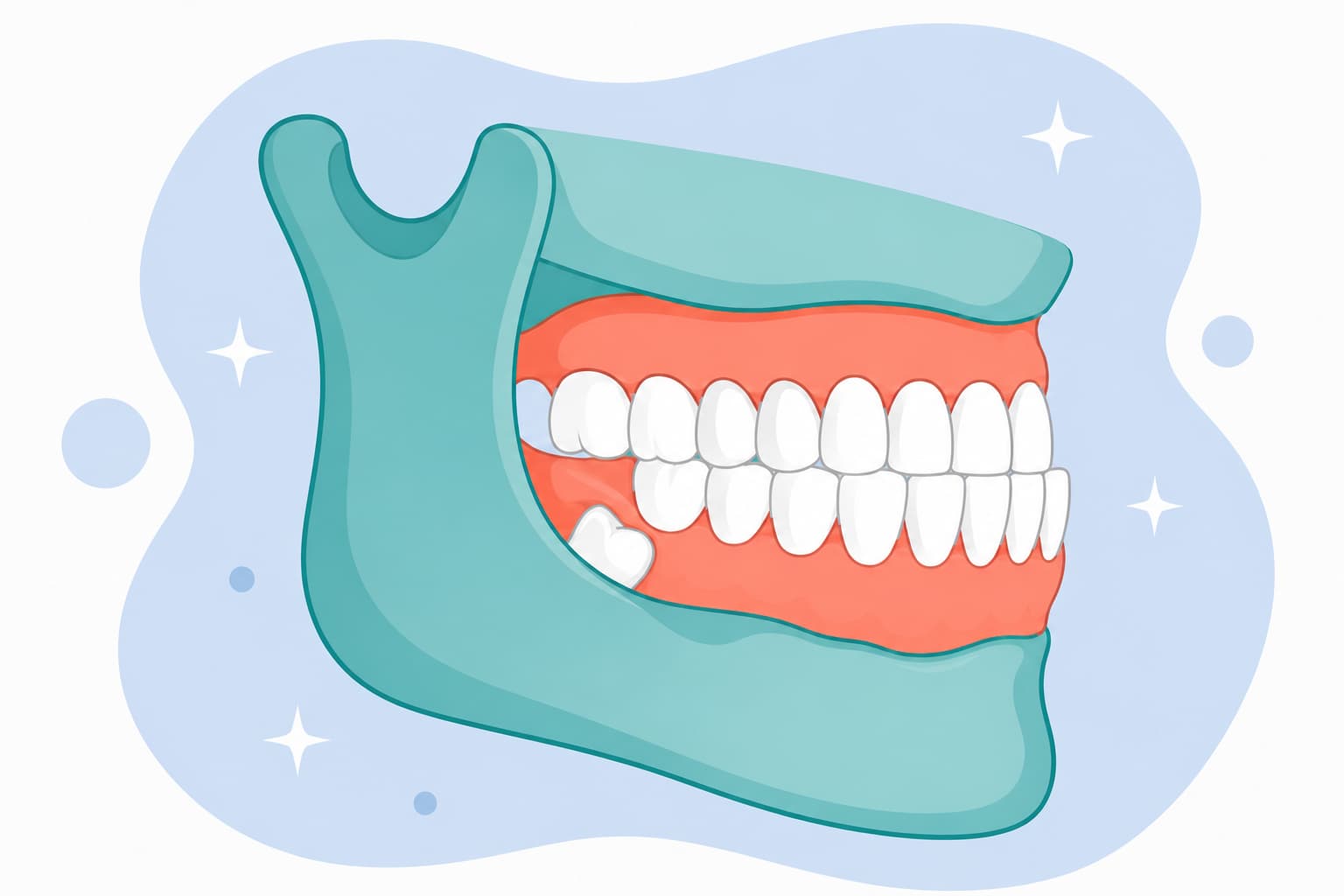
A tooth is impacted when it doesn't come through the gum when it's supposed to. Instead of showing up where it belongs, it stays buried in bone, trapped under gum tissue, or stuck at an angle that keeps it from coming in on its own.
The three most common types:
Impacted Canines
Upper canines are the second most commonly impacted tooth after wisdom teeth. These teeth matter. They're critical to how your smile looks and how your bite works. That's why we almost always try to save them rather than pull them.
Impacted Molars
Sometimes molars get stuck and don't fully come through. Depending on position and health, they can often be guided into place.
Impacted Wisdom Teeth
The most common impaction. Most wisdom teeth get pulled because there's simply no room. But if there's space and the tooth is healthy, bringing it into alignment is sometimes an option.
What Causes a Tooth to Get Impacted?
Not Enough Room
The most common cause. If the jaw is too small or too crowded, the tooth has nowhere to go. So it stays put.
Bone or Gum Tissue is too Dense
Sometimes the tissue over the tooth is thick enough that the tooth can't push through on its own. It needs help.
The Tooth Developed at the Wrong Angle
If the tooth is pointed sideways, backward, or toward another tooth's root, it can't follow a normal path into the mouth. It gets stuck wherever it formed.
Extra Teeth Blocking the Way
Supernumerary teeth (extras that aren't supposed to be there) can physically block normal teeth from coming in.
Genetics
Impaction patterns run in families. If a parent had an impacted canine, their kid is more likely to have one too.
Why You Can't Ignore an Impacted Tooth
An impacted tooth doesn't go away on its own. It sits there. And while it sits there, it can cause real damage:
- Cysts: Fluid-filled cysts can form around the impacted tooth. Left untreated, they can destroy bone and damage the roots of neighboring teeth.
- Root damage to other teeth: An impacted tooth pressing against the roots of the teeth next to it can weaken or destroy teeth that were perfectly healthy. This is one of the most serious risks and one of the biggest reasons to act early.
- Infection: Teeth that are partially through create pockets where bacteria collect. That leads to infection, swelling, and pain.
- Shifting and Crowding. The surrounding teeth drift into the space where the impacted tooth should be. That throws off alignment and can mess up an otherwise straight smile.
- Gaps: If the impacted tooth eventually needs to be pulled, you're left with a visible gap that may need an implant or bridge to fill.
The longer an impacted tooth goes untreated, the more complicated and expensive the fix becomes. Early imaging and early action change the entire outcome.
How We Fix Impacted Teeth at Cool Braces
Step 1: Find it and plan
We start with 3D cone-beam imaging (CBCT) to see exactly where the tooth is, what angle it's at, how deep it is, and what's around it. This isn't guesswork. We map the tooth's position in three dimensions before anything else happens. We also review your full dental history and any previous imaging.
Step 2: Expose it
For impacted teeth we want to save, we partner with an experienced oral surgeon. The procedure is straightforward:
• The surgeon makes a small incision in the gum
• Carefully uncovers the tooth
• Bonds a small bracket or chain to it so we can start guiding it orthodontically
It's a minor procedure done under local anesthesia or sedation. Most patients are surprised how quick the recovery is.
Step 3: Guide it into position
This is where our expertise matters most. After the tooth is uncovered, we use braces to slowly and precisely pull it into the arch where it belongs.
How long this takes depends on where the tooth is:
• A tooth close to the surface: 6 to 12 months
• A tooth deep in bone that needs significant vertical movement: 12 to 24 months or longer
Every millimeter matters. We're moving a tooth through bone and tissue into an exact position in the arch. This takes patience, precision, and experience. Dr. Tahir has done this hundreds of times over 30 years.
Step 4 (when necessary): Pull it
Some impacted teeth aren't worth saving. Wisdom teeth with no room. Teeth that are too deep or too angled to recover without risking damage to healthy teeth. Teeth that have developed cysts or pathology.
We'll be straight with you about which path makes sense. If saving the tooth gives you a better long-term outcome, that's the plan. If pulling it is the smarter call, we'll tell you that too. No ego. Just the right decision for your mouth.
Why Complex Cases Are Our Thing
Impacted teeth aren't routine orthodontics. They require advanced imaging, coordination with oral surgeons, and the kind of precise, patient orthodontic skill that only comes from experience.
Dr. Tahir has been doing this for over 30 years. He teaches orthodontics at UIC. He's guided hundreds of impacted teeth into position, including cases other practices said couldn't be done. Dr. Lia trained alongside him and brings the same precision to every case.
If you've been told your impacted tooth is too difficult or needs to be pulled, get a second opinion. Ours is free.
Impacted Teeth Treatment for Kids, Teens, and Adults
• Kids (ages 7 to 12): This is the detection window. Most impacted teeth can be spotted on early imaging before they become a problem. If we catch an impacted canine at age 8, we have options. If we don't find it until age 15, those options shrink. That's why the age 7 evaluation matters.
• Teens: Impacted canines are most commonly diagnosed in the teen years. Treatment involves surgical exposure followed by braces to guide the tooth into the arch. Timeline depends on depth and position.
• Adults: Impacted teeth can still be treated in adulthood. The process takes longer because adult bone is denser, but the outcome is still excellent in most cases. Some severe cases may require extraction and replacement rather than recovery, but we'll only go there if it's genuinely the best option.
What Should You Do Now?
Impacted teeth are the kind of case where experience matters more than anything else. You want an orthodontist who's done this hundreds of times, who works with top oral surgeons, and who won't give up on a tooth that can be saved.
That's Dr. Tahir and Dr. Lia. 30 years. 25,000+ patients. Bring your X-rays. Bring your questions. Bring the case someone else said was too hard.
Your first visit is free.
What Makes Cool Braces Different From Old-Fashioned Orthodontic Solutions



Frequently Asked Questions
Depends on where it is, how much room you have, and whether the tooth is healthy. Impacted canines are almost always worth saving. We work with oral surgeons to expose them and guide them into place with braces. Wisdom teeth are a different story. Most get extracted because there's simply no room. We'll look at your specific tooth and give you a straight answer.
It varies. A tooth close to the surface can be guided into place in 6 to 12 months. A tooth deep in bone might take 18 to 24 months or longer. We'll give you a specific timeline after looking at your X-rays and doing a full exam. No guesswork.
Yes. Once it's in the right position, an impacted tooth works just like any other tooth. Looks natural, chews normally, fits right into your bite. Most patients are surprised by how seamless the result is. You'd never know it was impacted.
No. The procedure is done under anesthesia or sedation so you won't feel anything during it. Afterward there's some soreness, similar to having a tooth pulled. Ice and over-the-counter pain relief handle it well. Most patients are surprised by how straightforward the recovery is.
We're Ready When You Are.