What Causes an Open Bite, and How to Fix It
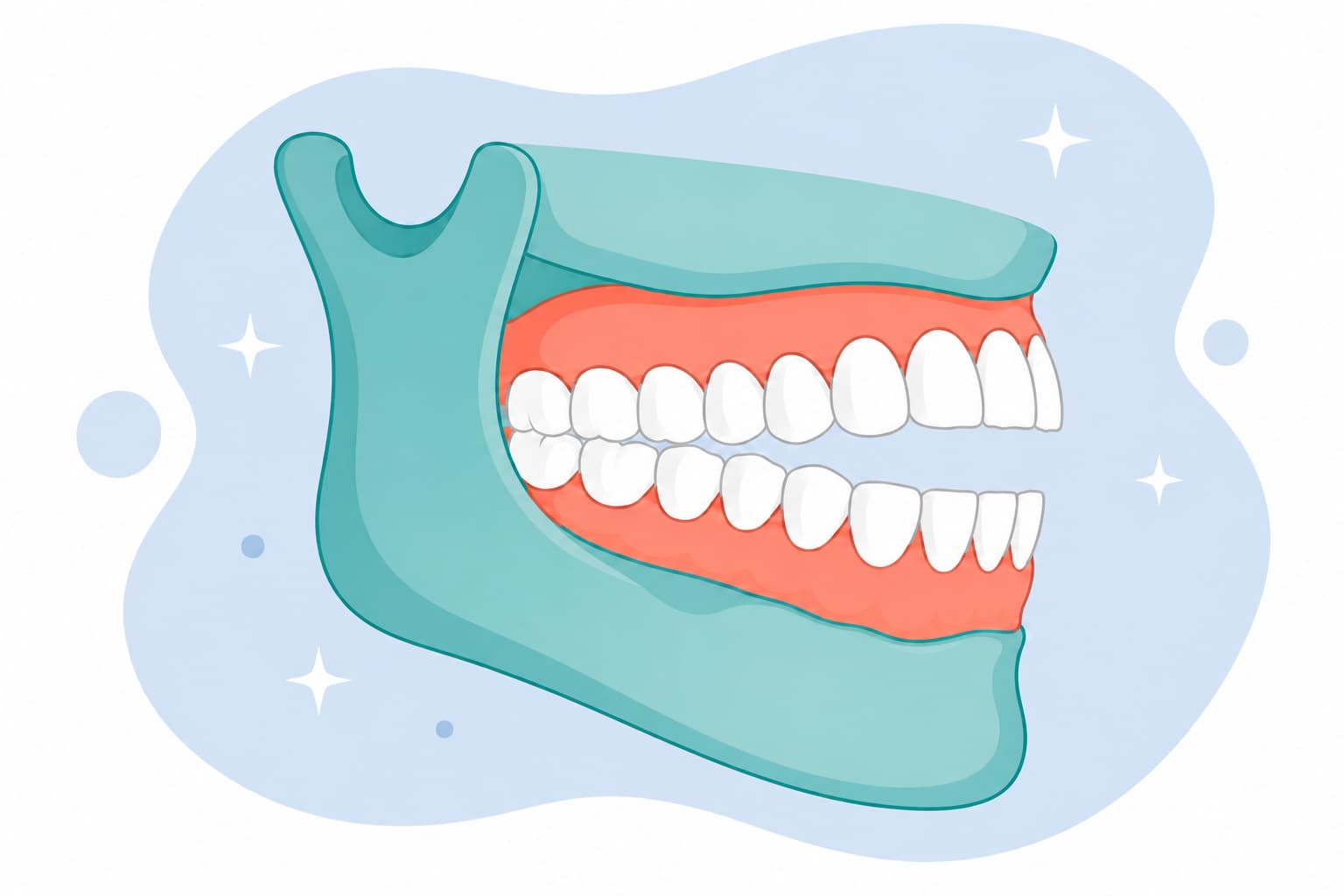
An open bite is a visible gap between your upper and lower front teeth when you bite down. Your back teeth touch but your front teeth don't meet. It affects how you eat, how you speak, and how you feel about your smile.
Open bites are less common than crowding or overbites, but they're very treatable, especially when we catch them early. Dr. Tahir and Dr. Lia treat the cause and the bite together so the problem doesn't come back. Your first visit is free.
What Is an Open Bite?
When you close your mouth, your front teeth should overlap slightly. With an open bite, they don't. There's a visible gap between the upper and lower front teeth even when your jaw is fully closed. You can't bite through a sandwich. You can't tear lettuce with your front teeth. The gap is always there.
Most open bites happen in the front (anterior open bite), but they can show up on the sides or back of the mouth too.
What Causes an Open Bite?
Thumb-Sucking & Finger-Sucking
The most common cause, especially in kids. The thumb sits between the upper and lower teeth and holds them apart. Do that long enough and the teeth grow around the habit. The bite stays open even after the thumb stops.
Tongue Thrust
Every time you swallow, your tongue pushes forward. If it pushes against or between your front teeth, that repeated force keeps the bite from closing. Tongue thrust can create an open bite and it can prevent one from being fixed if it's not addressed.
Skeletal Growth Pattern
Some people are born with a jaw that grows at a steep angle (orthodontists call it a high-angle pattern). This naturally pulls the front teeth apart and makes an open bite more likely. It's genetic and it's not caused by a habit.
Mouth Breathing
Breathing through the mouth instead of the nose changes how the jaw develops and how teeth come in. Over time, it can contribute to an open bite, especially in kids whose jaws are still growing.
Enlarged Tonsils or Adenoids
Swollen tonsils or adenoids can block the airway, which forces mouth breathing. That mouth breathing affects jaw development. It's a chain reaction that often ends with an open bite.
Why You Shouldn't Ignore an Open Bite
An open bite isn't something you grow out of. Without treatment, these problems either stay the same or get worse:
- You can't bite properly. Front teeth are supposed to work like scissors. With an open bite, they can't meet. Biting into an apple, tearing a piece of bread, eating a sandwich without it falling apart. All harder than they should be.
- Speech changes. Open bites affect how you pronounce 's' and 'z' sounds. Air escapes through the gap. Some patients develop a lisp they've had so long they think it's just how they talk.
- Your back teeth take the hit. When front teeth can't share the workload, your back teeth compensate. They wear down faster, take on forces they weren't built for, and can develop cracks over time.
- Jaw pain. The uneven forces from an open bite stress your jaw joint. That shows up as pain, clicking, headaches, or muscle fatigue.
- Dry mouth and cavity risk. If the open bite prevents your lips from fully closing, your front teeth are exposed to air constantly. That dries them out and increases cavity risk.
- Breathing issues. Open bites caused by mouth breathing or airway problems can be connected to sleep-related breathing issues that affect overall health.
- Confidence. A visible gap when you smile or speak affects how you feel in conversations, in photos, and in everyday life.
The bottom line: an open bite affects more systems than most people realize. Eating, speaking, breathing, jaw health, tooth longevity. So fixing it is about real function as much as your smile.
How We Fix Open Bites at Cool Braces
Find and Fix the Cause
Before we touch the bite, we figure out what created it. If thumb-sucking is the driver, we help break the habit. If tongue thrust is the issue, we address it directly. If mouth breathing is a factor, we may recommend an ENT evaluation to check for airway obstruction.
This step matters more with open bites than almost any other case. Fix the bite without fixing the cause and the open bite comes right back. Dr. Tahir and Dr. Lia have seen that happen with patients who were treated elsewhere. We don't repeat that mistake.
Bite plane Appliance
For patients with tongue thrust or skeletal open bite patterns, a bite plane is one of our most effective tools. It's a fixed appliance that sits behind your lower teeth and does two things:
- It stops your tongue from pushing between your front teeth
- It lets the front teeth come together naturally now that the tongue is out of the way.
Bite planes work especially well in growing kids because we're not fighting biology. We're removing the obstacle and letting growth do the rest. Most patients wear a bite plane for 6 to 12 months, usually followed by braces for final alignment.
Learn more about orthodontic appliances.
Braces
After the cause is addressed and any appliance phase is complete, braces finish the job:
- Moving front teeth together vertically to close the gap
- Fixing any rotations or alignment issues
- Making sure upper and lower arches fit together properly
- Building a stable bite that stays closed
The braces phase typically runs 18 to 24 months after any initial appliance work. Braces give us the control to make precise vertical movements that aligners can't reliably do, which is why we lead with braces for open bite cases.
Habit Breaking
If your child is still thumb-sucking or tongue-thrusting, we work with you and your child to break the habit. Sometimes starting treatment is the motivation kids need to stop. Having braces or an appliance in the mouth makes the habit physically harder to continue, and most kids adapt quickly once they understand why it matters.
Why Early Treatment Changes Everything with Open Bites
Open bites respond to early treatment better than almost any other bite issue. Here's why:
Between ages 6 and 10, your child's jaw is still growing and their teeth are still coming in. If we catch the open bite during that window, we can stop the habit that's causing it, place a bite plane to let the teeth close naturally, and guide the jaw into a better growth pattern.
What could take 24 to 36 months to fix in a teenager can often be managed in 6 to 12 months in a younger child. The jaw is more flexible. The teeth are more responsive. The habit is easier to break.
Miss that window and the bite continues to develop around the problem. The open bite gets deeper. The skeletal pattern sets. Treatment gets more complex. In severe adult cases, surgery may be the only option.
That's why we recommend every kid comes in at age 7. Not to start treatment. To catch things like this while the fix is still simple.
Open Bite Treatment for Kids, Teens, and Adults
- Kids (ages 7 to 10): The ideal window. If we identify the open bite early, a combination of habit breaking and a bite plane can resolve it before it becomes a structural problem. Most early open bite treatment takes 6 to 12 months. That's it.
- Teens: If the open bite wasn't caught early, braces are the primary tool. We'll address any remaining habits and use braces to close the gap and build a stable bite. Timeline depends on severity but typically runs 18 to 24 months.
- Adults: Open bites in adults are treatable but more complex. Adult bone doesn't grow or adapt the way a child's does, so we rely entirely on tooth movement to close the gap. Most adult open bites respond well to braces. Severe skeletal cases may need surgical support, but that's uncommon. We'll tell you honestly what your case needs at the consultation.
What Should You Do Now?
Open bites are one of those issues that look small but affect a lot. Eating, speaking, breathing, jaw health, confidence. If you or your child has a gap between the front teeth when biting down, don't wait to see if it resolves on its own. It usually doesn't.
Dr. Tahir and Dr. Lia have been treating open bites for over 30 years. Bring your questions. Bring your concerns. Bring the kid who's still sucking their thumb and you're not sure what to do about it.
Your first visit is free, and you'll leave knowing what's causing the open bite and how we'll treat it.
What Makes Cool Braces Different From Old-Fashioned Orthodontic Solutions



Frequently Asked Questions
Depends on severity. A small gap might be purely cosmetic. A larger one affects chewing, speech, and tooth wear over time. If it's caused by tongue thrust or mouth breathing, fixing it early prevents bigger problems down the road. Come in and let Dr. Tahir and Dr. Lia take a look. They'll tell you exactly what you're dealing with and what it needs.
It usually gets worse as permanent teeth come in. Thumb-sucking keeps teeth apart, speech can be affected, and treatment gets harder the longer you wait. Early treatment prevents all of that. Better to check now than wish you had later.
Depends on severity. With a bite plane first: 6 to 12 months on the appliance, then 18 to 24 months with braces. Braces alone: 18 to 24 months. Mild cases can wrap up faster. The real timeline depends on what's driving your open bite and how your teeth respond to treatment. Dr. Tahir and Dr. Lia will give you your specific timeline at a free visit.
Yes. Bite planes work best in growing kids, but braces work well for adults too. Most adult open bites respond well to orthodontic treatment alone. Severe skeletal cases may benefit from surgery, but we'd only bring that up if it actually applies to your case.
Not if we address it properly. That means correcting the bite, breaking the underlying habit if there is one (tongue thrust, thumb-sucking), and wearing your retainer consistently. Skip any of those and relapse is more likely. We'll set you up with a retention plan that keeps your bite stable long-term. And if a referral to another specialist helps with stability, we'll make that happen too.
We're Ready When You Are.