Understanding and Correcting an Overbite
An overbite is when your upper front teeth overlap your lower front teeth too much. Some overlap is normal. Too much causes problems: worn-down teeth, gum damage, jaw pain, and a smile that doesn't look or feel right.
Overbites are the most common bite issue we treat. Dr. Tahir and Dr. Lia have corrected thousands of them across every severity level. Kids, teens, adults. Mild, moderate, severe. Your first visit is free.
What Is an Overbite?
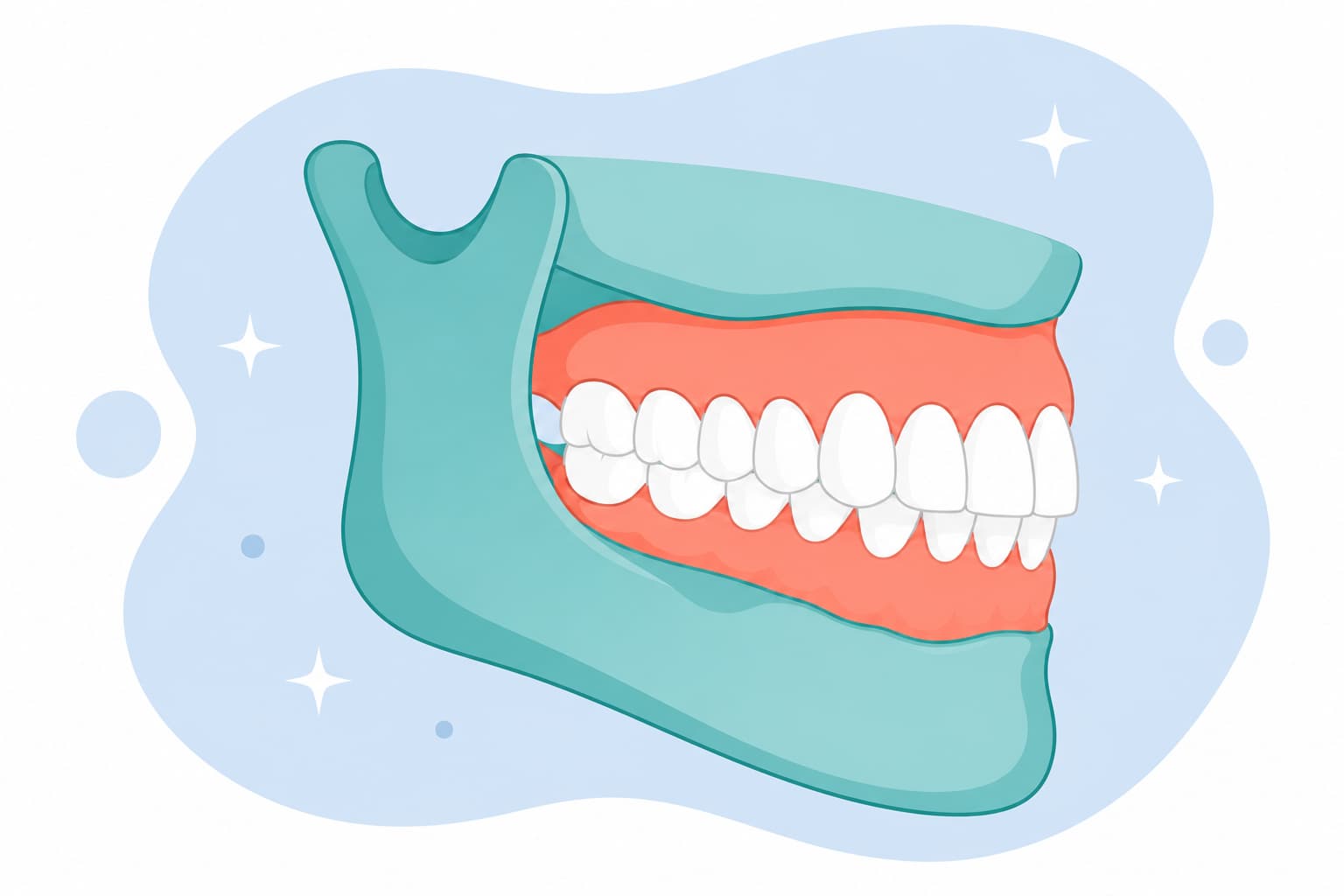
An overbite is the vertical distance your upper front teeth overlap your lower front teeth. Everyone has some. That's normal and healthy. The ideal overlap is 2 to 3mm. That's just enough to protect your lower teeth when you chew.
A problem starts when that overlap gets too deep, usually 5mm or more. That's when the upper teeth cover too much of the lower teeth and the bite stops working the way it should.
Overbites fall into two categories:
- Dental overbite: The teeth are the issue. They're positioned in a way that creates too much overlap, but the jaw itself is in a normal position.
- Skeletal overbite: The jaw is the issue. The upper jaw is too far forward, or the lower jaw is too far back, or both. The bone structure creates the excess overlap.
Most overbites have some of each. Dr. Tahir and Dr. Lia look at both the teeth and the jaw to figure out what's actually driving yours. That distinction changes the treatment plan.
What Causes an Overbite?
Genetic
Jaw size and shape are inherited. If your parents or grandparents had a deep overbite, there's a good chance you will too. This is the most common cause and it's not something that can be prevented. But it can be treated.
Childhood Habits
Thumb-sucking, finger-sucking, and extended pacifier use push upper front teeth forward during the years when teeth and bone are most impressionable. The longer the habit continues, the deeper the overbite develops.
Jaw Growth Imbalance
During childhood, the upper jaw can outgrow the lower jaw. Or the lower jaw can fall behind. Either way, the mismatch creates an overbite that gets more noticeable as the child grows.
Tongue Thrust
If your tongue pushes against your front teeth every time you swallow, that repeated pressure gradually pushes the upper teeth forward and deepens the overbite over time. It's subtle but constant.
Why You Shouldn't Ignore an Overbite
A mild overbite might not cause obvious problems right away. But as the overlap increases, the damage adds up:
- Your lower teeth wear down. This is the most common consequence. The upper teeth press against the lower teeth at a steep angle. Over years, the lower front teeth get shorter, thinner, and weaker. Some patients don't notice until the wear is severe because it happens gradually.
- Gum damage. In deep overbites, the lower front teeth can push into the gum tissue behind the upper teeth. That causes recession, sensitivity, and tissue damage that gets harder to reverse the longer you wait.
- Jaw pain and TMJ issues. An overbite forces your jaw into a position that stresses the joint. Pain, clicking, popping, headaches, and muscle fatigue are all connected to a bite that's been too deep for too long.
- Speech. Deep overbites can cause lisping or affect how clearly you pronounce certain sounds. Correcting the bite usually corrects the speech along with it.
- Breathing. Severe overbites, especially those with a recessed lower jaw, can reduce airway space. That can contribute to mouth breathing and sleep-related breathing problems.
- Confidence. A deep overbite can make the lower face look shorter or the chin look pushed back. A lot of patients don't realize how much the overbite was affecting their profile until they see the change after treatment.
Bottom line: overbites get deeper over time, not shallower. The teeth keep wearing. The gums keep receding. The jaw keeps compensating. Earlier treatment means less damage to undo and a simpler path to a healthy bite.
How We Fix Overbites at Cool Braces
Traditional Braces
Our primary tool for overbite correction. Braces give us the control to gradually move the upper teeth back, bring the lower teeth forward and up, and reduce the overlap to the ideal 2 to 3mm.
For overbite cases, we often use rubber bands or springs alongside braces. These apply gentle, continuous force that pulls the bite into the right relationship. Braces work 24/7, which matters when you're correcting something as fundamental as how deep the bite closes.
Most overbite cases with braces take 18 to 24 months. The timeline depends on severity and whether an appliance phase comes first.
Growth-Guiding Appliances (For Growing Kids)
If your child is still growing, we can guide jaw development with specialized appliances:
- MARA (Mandibular Anterior Repositioning Appliance): a fixed appliance that encourages the lower jaw to grow forward, correcting the overbite at the skeletal level
- Forsus springs: fixed springs that work alongside braces to push the lower jaw forward and pull upper molars back simultaneously
- Herbst appliance: a fixed appliance that holds the lower jaw in a forward position during growth, gradually retraining the jaw's resting position
The ideal window is during the growth spurt, typically ages 8 to 14. Dr. Tahir has been using these appliances for over 30 years. He knows exactly when to start based on your child's growth stage, not a generic age range. That timing matters because starting too early wastes time and starting too late misses the window.
Learn more about orthodontic appliances.
Invisalign (Mild Overbite Cases Only)
For mild overbites with a solid bite foundation, Invisalign can reduce the overlap. But for anything moderate to severe, braces give us significantly more control over the vertical movements that overbite correction requires.
We'll be straight with you about which tool your case needs. If aligners can handle it, we'll say so. If braces are the better path, we'll tell you that too.
How Long Does Overbite Treatment Take?
Braces alone: 18 to 24 months. Growth guidance in kids, then braces: 6 to 12 months on the appliance, then 18 to 24 months in braces. Mild overbites with Invisalign: 12 to 18 months.
Those are general ranges. Your timeline depends on how deep the overbite is, whether it's dental or skeletal, your age, and how your teeth respond to treatment. Dr. Tahir and Dr. Lia need to see your X-rays and evaluate your bite before giving you a number you can plan around. You'll get that at your free consultation.
Overbite Treatment for Kids, Teens, and Adults
- Kids (ages 7 to 12): Early evaluation catches overbites before they get deep. If growth guidance is needed, this is the window to use it. A growth-guiding appliance during the right stage of development can redirect jaw growth and reduce the overbite at its source. That often makes the braces phase shorter and takes more aggressive treatments off the table later.
- Teens: Most teen overbites are treated with braces alone or with a combination of growth guidance and braces if some growth remains. Treatment is straightforward and results are predictable. This is the most common age group we treat for overbites.
- Adults: Growth guidance won't work on adult bone. But braces correct overbites effectively by repositioning teeth within the existing jaw. Most adults get a great result with braces alone. Severe skeletal overbites may benefit from surgical support, but that's uncommon. We'll tell you exactly what your case needs.
What Should You Do Now?
Overbites are the most common bite issue in orthodontics, and the one we've treated more than any other. Over 25,000 patients. Over 30 years. A father-daughter team that sees overbites every single day and knows exactly how to correct them.
Whether it's your child's developing bite or your own smile you've been thinking about, come in and let Dr. Tahir and Dr. Lia take a look.
Your first visit is free, and you'll leave with a clear picture of what your bite needs.
What Makes Cool Braces Different From Old-Fashioned Orthodontic Solutions



Frequently Asked Questions
Depends on severity and age. Most cases with braces run 18 to 24 months. Growing kids who start with a growth-guiding appliance first add 6 to 12 months before braces begin, but often finish faster overall because the appliance does the heavy lifting early. Dr. Tahir and Dr. Lia will give you a specific timeline after reviewing your X-rays and doing a full exam. First visit is free.
Not always. A lot of overbites can be fixed without pulling any teeth, especially when treatment starts early. For more severe cases, extractions are sometimes the right move. We'll show you the reasoning at your consultation with your actual X-rays in front of you. No guessing.
Not really. Pricing is similar across most orthodontic treatments. Growth-guiding appliances may add some cost upfront, but they can reduce the need for surgery or extended treatment later, which often saves money overall. We'll give you exact numbers at your free consultation. No ranges. No surprises.
Yes. Adult bone doesn't respond to growth-guiding appliances the way a child's does, but braces work very well for adults with overbites. Most adult cases get excellent results with braces alone. Severe skeletal cases may benefit from jaw surgery, but that's uncommon and we'd only bring it up if it genuinely applies to you. Come in and let Dr. Tahir and Dr. Lia tell you what your case actually needs. First visit is free.
Not if you wear your retainer. Consistent wear is what keeps your corrected bite stable for life. Skip it and teeth shift back. It's that simple. We'll fit you with the right retainer at the end of treatment and walk you through exactly how long and how often to wear it.
We're Ready When You Are.