What Is Overjet, and How We Treat It
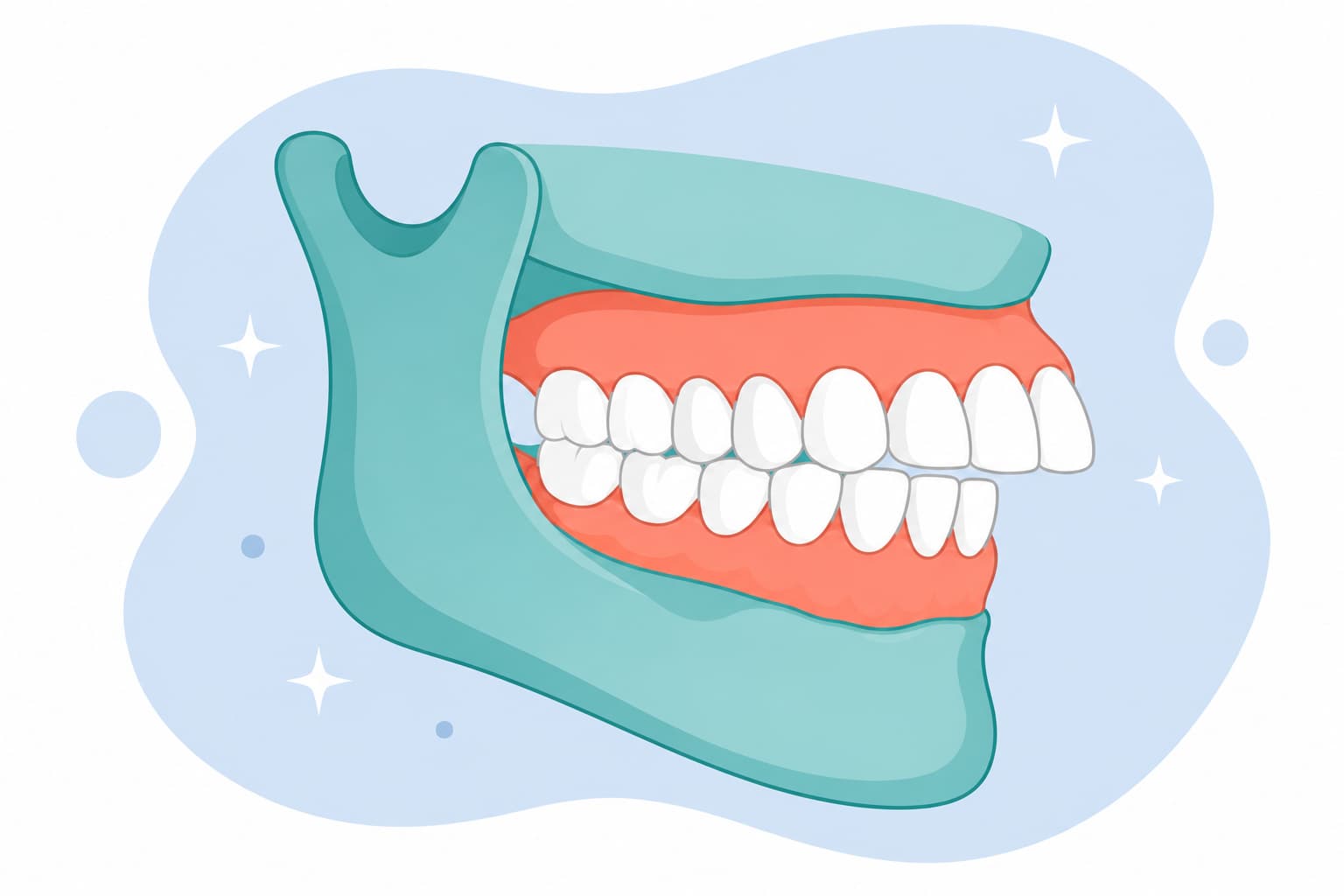
Overjet is when your upper front teeth stick out too far forward past your lower teeth. Some people call it protruding teeth. Some call it buck teeth. Whatever you call it, it's a horizontal measurement, not a vertical one (that's overbite). Normal overjet is 2 to 3mm. Anything beyond that can cause real problems and usually needs treatment. Dr. Tahir and Dr. Lia correct overjet every week. Your first consultation is free.
Overjet vs. Overbite: What's the Difference?
People mix these up all the time. Here's the simple version
Overbite
Overbite is vertical. How much your upper teeth overlap your lower teeth from top to bottom. Normal is 2 to 3mm.
Overjet
Overjet is horizontal. How far your upper teeth stick out in front of your lower teeth. Normal is also 2 to 3mm.
You can have one without the other. You can have both. Some patients walk in thinking they have an overbite when it's actually an overjet, or the other way around. That's why the assessment matters. Dr. Tahir and Dr. Lia measure both and correct whatever needs correcting.
What Causes Excessive Overjet?
Genetics and Jaw Proportion
Jaw size is inherited. If your upper jaw is naturally larger or more forward than your lower jaw, overjet develops. This is the most common cause.
Upper Jaw Grew Too Far Forward
During childhood development, sometimes the upper jaw outpaces the lower jaw. The teeth end up further forward than they should be.
Lower Jaw Didn't Grow Enough
The flip side. If the lower jaw stays behind, the upper teeth look like they protrude even if they're in a normal position. It's about the relationship between the two jaws.
Tooth Position
Sometimes the jaw size is fine but the teeth themselves are angled too far forward on the bone.
Habits
Thumb-sucking and finger-sucking push upper front teeth forward over time. The longer the habit lasts, the more the overjet develops.
Why You Shouldn't Ignore Overjet
Injury Risk
This is the big one. Teeth that stick out are significantly more likely to get chipped, cracked, or knocked out during falls, sports, or everyday accidents. Every millimeter of extra protrusion increases the risk. For kids and teens especially, this is a safety issue, not just a cosmetic one.
Appearance and Confidence
Pronounced overjet changes how your smile looks and how you feel about it. A lot of our patients say they stopped smiling in photos or covered their mouth when they laughed. Correcting the overjet changes that.
Speech
Protruding front teeth can affect how you pronounce 's,' 'f,' and 'th' sounds. Some patients develop a lisp. Correcting the overjet usually corrects the speech along with it.
Harder to Keep Clean
Upper teeth that stick out are harder to brush properly and harder to seal with your lips. That means more exposure to bacteria, more plaque buildup, and higher risk of cavities and gum disease.
Difficulty Biting
Your front teeth are supposed to work together like scissors. With excessive overjet, they can't. Biting into things like apples, sandwiches, or corn on the cob becomes frustrating or impossible.
Jaw Strain
Your jaw compensates for the misalignment. Over time, that compensation shows up as TMJ pain, headaches, clicking, and muscle fatigue. The longer it goes untreated, the more your jaw pays for it.
The Bottom Line
Overjet gets worse as kids grow, and it puts teeth at risk every day it goes untreated. Fixing it early protects the teeth, the jaw, and the confidence.
How We Fix Overjet at Cool Braces
Growth Guidance for Kids
If your child is still growing, we have a real advantage. Growth-guiding appliances can:
- Encourage the lower jaw to come forward
- Limit the upper jaw from growing further out
- Guide front teeth into a better position as they come in
These appliances include MARA, Forsus, and Herbst designs. These appliances work with your child's natural growth instead of fighting it. That's the whole idea behind early treatment. Use the growth window while it's open. A growth-guidance phase typically runs 6 to 12 months and can dramatically reduce the overjet before braces even start.
Learn more about early treatment.
Traditional Braces
Our primary tool for overjet correction. Braces let us:
- Retract upper front teeth backward
- Position lower teeth forward and up
- Create proper horizontal overlap
- Maintain or improve vertical overlap (overbite)
For overjet cases, we often add rubber bands or springs that apply gentle, continuous force to pull things into position. Braces work around the clock. No compliance variable. No wondering if the trays are in. Just steady, controlled movement until everything lines up.
Most overjet cases take 18 to 24 months with braces. Cases that start with a growth-guidance phase in kids may take longer overall but produce a better, more stable result.
Invisalign (Mild Overjet Only)
For mild overjet with a solid bite foundation, Invisalign can retract the upper front teeth. But for anything moderate to severe, braces give us significantly more control. We'll be straight with you about which tool your case actually needs. If aligners can do it, great. If not, we won't pretend they can.
Surgical Option (Severe Skeletal Cases)
In rare cases where the upper jaw is drastically larger than the lower jaw, orthodontics alone isn't enough. Combined braces and surgical jaw repositioning can correct severe skeletal overjet. This is uncommon. Most patients never need it. But when it's the right call, the results are life-changing. We'll only bring this up if it genuinely applies to your case.
Overjet Treatment for Kids, Teens, and Adults
We treat overjet at every age, but the approach changes:
- Kids (ages 6 to 10): The growth window is open. Growth-guiding appliances can redirect jaw development and reduce overjet before permanent teeth are fully in. This is the ideal time to start.
- Teens: Most teen overjet cases are treated with braces. If growth guidance was done earlier, the braces phase is usually shorter and simpler.
- Adults: Growth guidance won't work on adult bone, but braces absolutely do. Most adults with overjet get great results with braces alone. Severe skeletal cases may need surgical support, but that's rare.
What Should You Do Now?
Overjet doesn't fix itself. And every year you wait, the teeth are more exposed to injury, the jaw works harder to compensate, and the correction becomes more complex. Dr. Tahir and Dr. Lia have been fixing overjet for 30 years. Come in and let them take a look.
Your first visit is free, and you'll leave with real answers about your overjet.
What Makes Cool Braces Different From Old-Fashioned Orthodontic Solutions



Frequently Asked Questions
Basically, yes. Buck teeth is the everyday term for upper front teeth that stick out significantly. Overjet is the clinical measurement of how far your upper front teeth sit in front of your lower front teeth. Same problem, different vocabulary. Normal overjet is 2 to 3mm. Anything beyond that starts causing the look and the problems most people associate with buck teeth.
Most cases can be fully corrected. We bring the upper teeth back and reposition the lower teeth to hit the ideal 2 to 3mm overjet. Severe skeletal cases may need surgical support, but that's uncommon and we'd only bring it up if it genuinely applies to you. For most patients, braces get the job done. Come in and let Dr. Tahir and Dr. Lia tell you exactly what your case needs.
No. The goal is the ideal 2 to 3mm overjet, not pulling teeth back too far. We look at your bite, facial profile, lip support, and overall smile aesthetics before moving anything. The result is a balanced, natural-looking smile where everything is in the right proportion. Not retracted. Just right.
Depends on severity and age. Braces alone typically run 18 to 24 months. Growing kids who start with a growth-guiding appliance first add 6 to 12 months before braces begin, but often finish with a better and more stable result. Dr. Tahir and Dr. Lia will give you a specific timeline after reviewing your X-rays and doing a full exam. First visit is free.
Not if you wear your retainer. Fixed, removable, or both. We'll set you up and your correction stays locked in. The retainer is the last piece of the puzzle. Don't skip it.
We're Ready When You Are.