Why Is a Tooth Growing Out of the Gum?
Sometimes a tooth comes in where it shouldn't. Too far forward, too far back, at a weird angle, or way up on the gum. It looks alarming but it's actually common and very fixable. The clinical term is ectopic eruption. The plain English version: the tooth took a wrong turn.
Dr. Tahir and Dr. Lia catch these early and guide them into the right position before they cause bigger problems. The earlier we look, the simpler the fix. If your child has a tooth coming in somewhere it doesn't belong, bring them in. The visit is free.
What Is Ectopic Eruption?
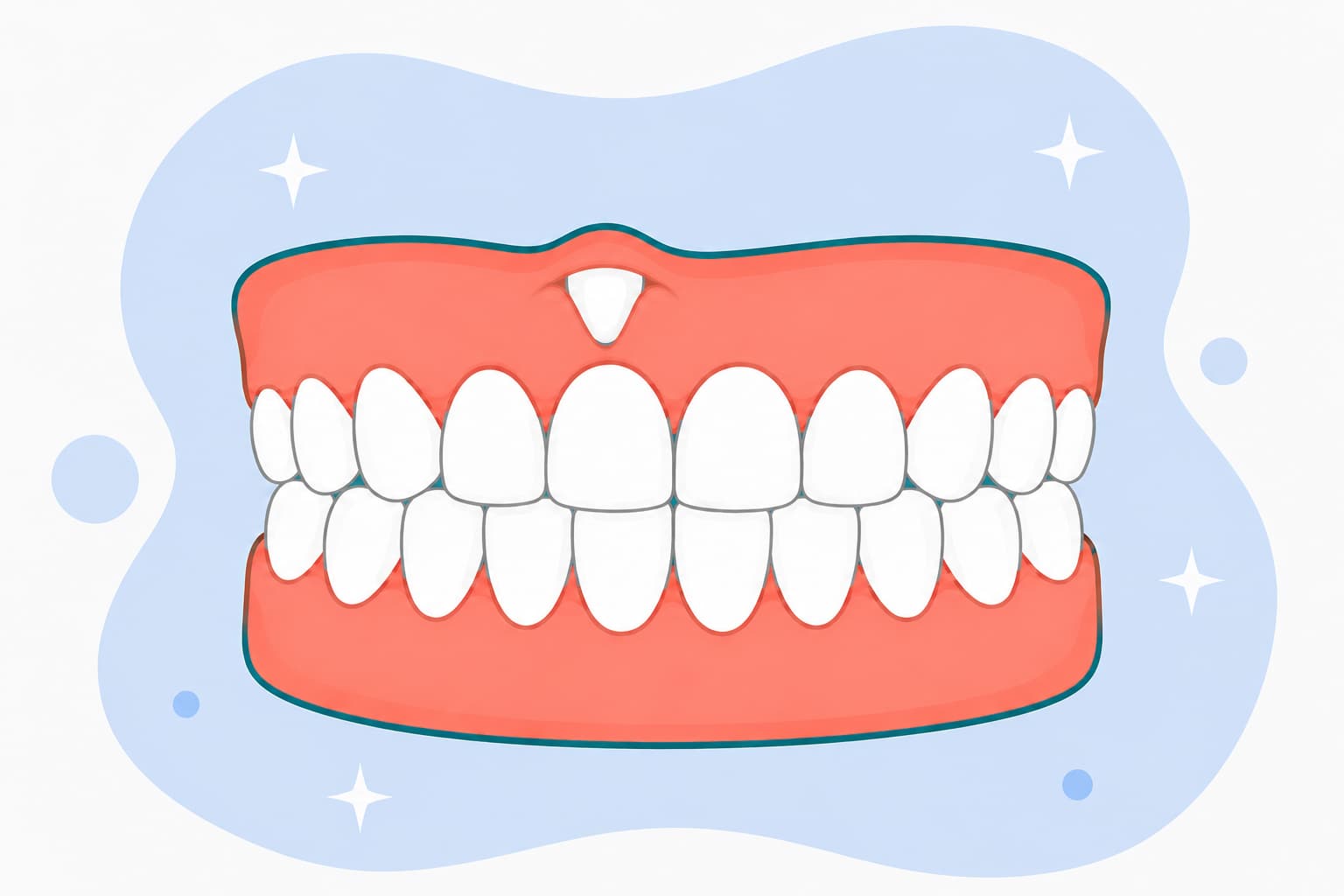
It's when a permanent tooth erupts in the wrong spot instead of where it's supposed to sit in the arch. Instead of coming in straight and in line, it shows up somewhere unexpected.
What it looks like:
- A tooth coming in behind or in front of another tooth
- A tooth erupting at an angle instead of straight
- An upper canine poking through high on the gum instead of in its normal spot
- A molar coming in out of position
Upper canines are the most common offenders. The good news: most of these teeth find their way once we create space or pull the baby tooth that's blocking the path at the right time.
What Causes It?
Not Enough Space
#1 cause. When the arch is too crowded, the permanent tooth has nowhere to go. So it comes in wherever it can fit.
Baby Teeth Overstaying Their Welcome
If a baby tooth doesn't fall out on schedule, the permanent tooth underneath can't follow its intended path. It detours around the obstacle and erupts in the wrong spot.
Tooth Size or Shape
Oversized permanent teeth or teeth with unusually shaped roots can throw off the eruption angle.
Genetics
Ectopic eruption patterns run in families. If a parent had it, their child is more likely to.
Extra Teeth
Supernumerary teeth (extra teeth that aren't supposed to be there) can physically block the normal eruption path.
Is It Serious?
Not immediately dangerous. But left alone, it can lead to problems that are harder and more expensive to fix later:
- Crowding: The misplaced tooth pushes on its neighbors and throws off alignment.
- Gum Damage: A tooth erupting in the wrong spot can push through gum tissue where it shouldn't, causing recession and sensitivity.
- Hard to Clean: A tooth that's out of position is harder to brush and floss properly. More plaque, more cavity risk.
- Root Damage: In some cases, the ectopic tooth can press against the roots of the teeth next to it. That can weaken or damage teeth that were perfectly healthy.
- Appearance: A tooth visibly out of place affects how the smile looks, which matters to kids and teens more than most parents realize.
None of these problems get better on their own. They get worse. That's why catching it early changes everything.
How We Fix It at Cool Braces
Step 1: Create Space and Let the Tooth Self-Correct
For a lot of cases, the fix is surprisingly simple. We pull the baby tooth that's in the way at the right time, and the permanent tooth finds its own path into the correct position. No braces. No appliances. Just good timing.
Step 2: Guide it With an Expander or Early Braces
If the tooth needs more help, we step in with:
- A palatal expander to widen the upper arch and create room for the tooth to come in properly
- Or Early braces (Phase 1 treatment) to gently guide the tooth into position as it erupts
Early intervention for ectopic eruption typically takes 6 to 12 months. Short treatment window, big payoff. We're fixing the problem while your child is still growing, which makes everything easier.
Step 3 Surgical Exposure (Rare)
If the tooth is deeply stuck and can't erupt on its own even with space, we may refer to an oral surgeon to uncover it. Then we use braces to guide it down into position. This is uncommon with ectopic eruption. Most cases never get here, especially when we catch them early.
Why Early Detection Matters
Between ages 7 and 10, your child's jaw is still growing and their permanent teeth are still coming in. That's the window. If we spot ectopic eruption during that window, we can usually fix it with minimal treatment. Pull a baby tooth. Maybe an expander. Maybe a short round of Phase 1 braces. Done.
Miss that window, and the problem compounds. The ectopic tooth causes crowding. The crowding causes rotation. Now what could have been a simple fix turns into a full treatment plan.
This is exactly why we recommend every kid comes in at age 7. Not to start treatment. To catch things like this before they snowball.
Learn more about early treatment.
What Should You Do Now?
If your child has a tooth coming in at a weird angle, too high, too far back, or just somewhere that doesn't look right, trust your gut. You're probably right that something's off. Bring them in and let Dr. Tahir and Dr. Lia take a look. It might be nothing. It might be a quick fix that saves you thousands in treatment later.
Your first visit is free, so bring them in before it turns into something bigger.
What Makes Cool Braces Different From Old-Fashioned Orthodontic Solutions



Frequently Asked Questions
Sometimes yes, sometimes no. It depends on how far off the permanent tooth is, how much space there is, and timing. We'll take a look and tell you the best move. Every kid is different.
Sometimes. If we remove the baby tooth that's blocking the path, some permanent teeth will find their way into the right position on their own. Others need guidance from braces or an expander. We'll evaluate your child's specific case and tell you honestly whether waiting makes sense or whether early action gives a better outcome.
Not necessarily. If we catch it early and create space or do some minimal work, your child might not need full braces later. Early action often prevents bigger treatment down the line. That's the whole idea behind coming in at age 7.
Depends on what's needed. Sometimes pulling a baby tooth is all it takes and treatment is done. If early braces are needed to guide the tooth into position, treatment is typically finished before all the permanent teeth come in. Dr. Tahir and Dr. Lia will tell you exactly what your child's case needs at a free consultation.
Around age 7. That's the recommendation from the American Association of Orthodontists, and it's the window where we can spot ectopic eruption before it becomes a bigger problem. Most kids that age don't need treatment yet. But if something's off, catching it early means a simpler fix. If you notice a tooth coming in at a weird angle or an unusual spot before then, don't wait for the annual checkup. Call us. First visit is always free.
We're Ready When You Are.